Software has plenty of English names and an alarming number of acronyms. Plattdeutsch, known as Low German in English, is a regional language traditionally spoken across northern Germany. You don’t see much of it in software. So, naturally, we called our software project Dengel.
A word for making things work
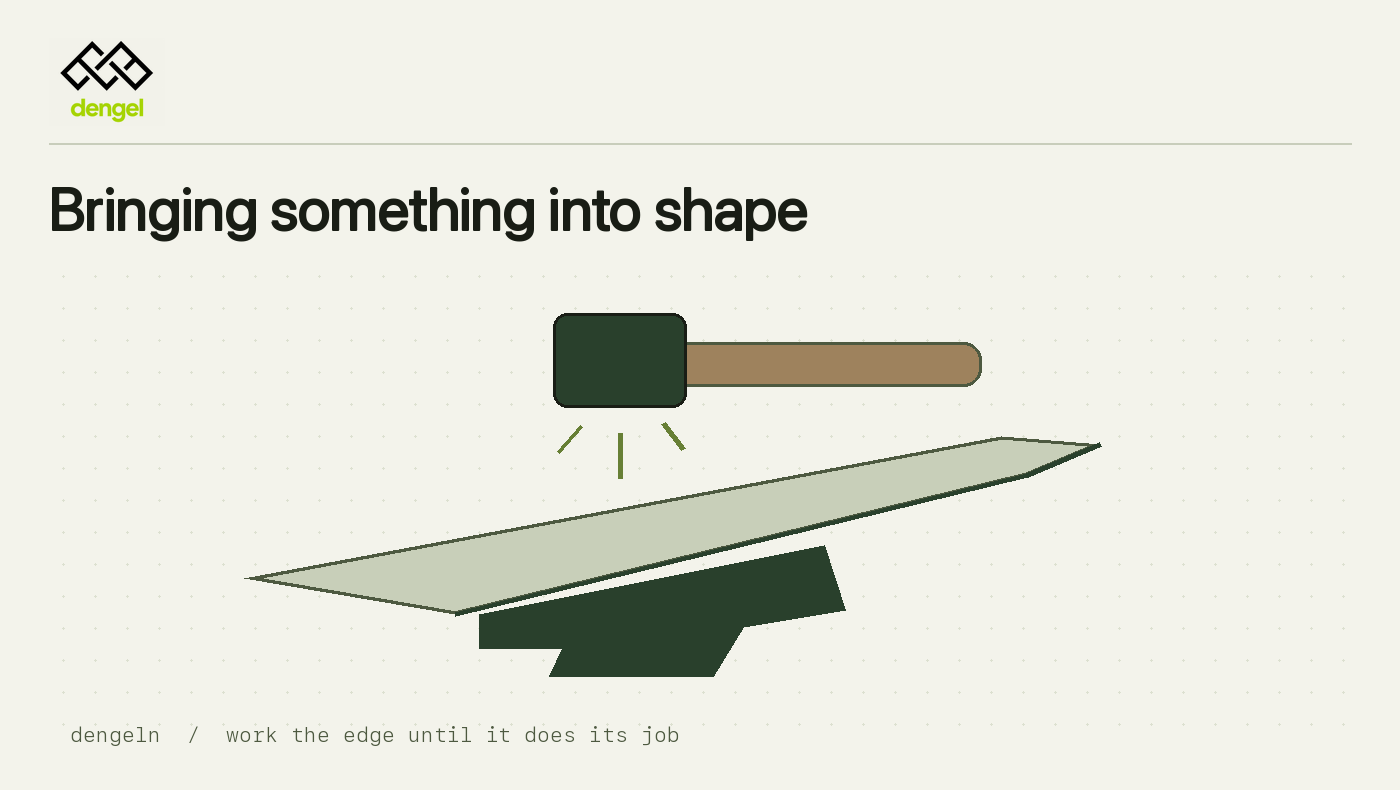
In the northern German vernacular we had in mind, dengeln means to bring something into shape, to make it work. The older meaning is wonderfully specific. You hammer the edge of a scythe blade to thin and sharpen it. There’s a tool, there’s an edge, and there’s a job it needs to do. Duden’s entry for dengeln
Plattdeutsch had already made its way into the project. The early experiment was called Schuut, Low German for a harbour barge. The image was a train of barges being towed to the quay. That suited the question we were asking at the time: how do you bring several changes in together when they’re all heading for the same branch?
What needs bringing into shape
Dengel fits the larger job. A coding agent can make a patch. Give two agents the same starting point and they can make two perfectly plausible patches. Now put them together, run the checks on the combined version and see whether it’s actually ready to ship. That’s where the work starts to look a bit more like dengeln.
I like that the word is about getting something to do its job. A retry should retry the right thing and still fit inside the deadline. A check should tell you what it checked. And when you approve a change, you should know exactly which one you’re putting on main. The name makes a decent test for the product.
Anyhow, there’s room for a little more Plattdeutsch in software. We’ll start with one word.